

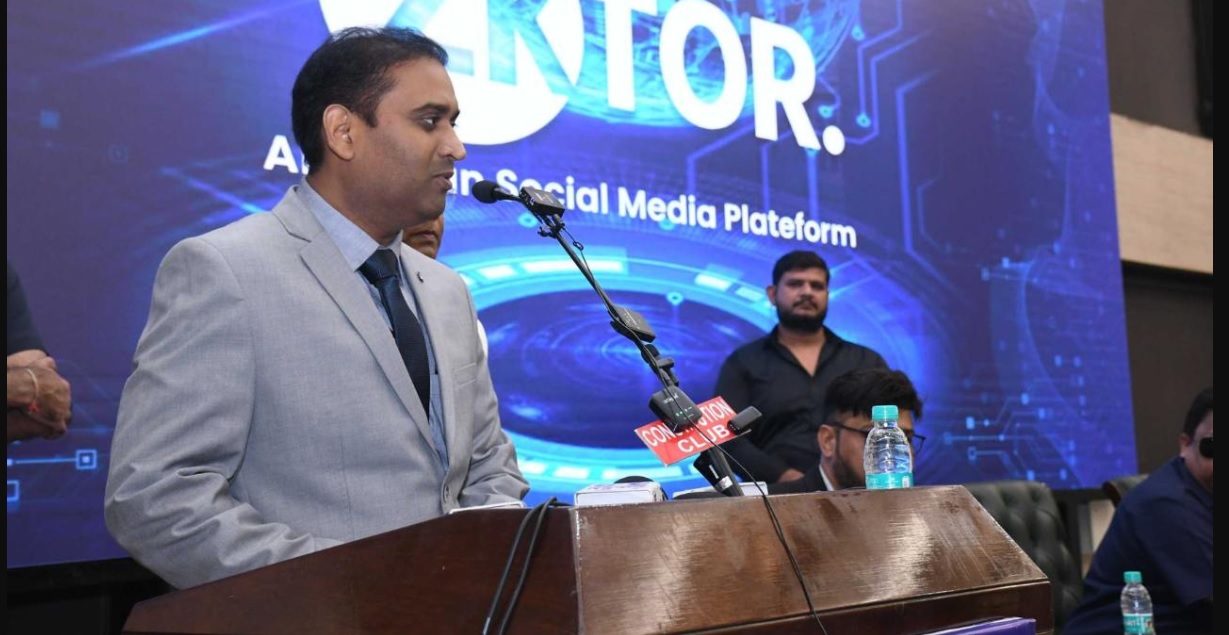
By combining privacy and data safety by design, Zero Knowledge Server Architecture, No URL Media Architecture, protected communication, contextual advertising, hyperlocal commerce and culturally grounded artificial intelligence, Softa Technologies founder Sunil Kumar Singh is advancing a distinctly Indian idea: the safest social media platform for a family should not be the platform that watches every member most closely, but the one capable of giving every generation meaningful connection without erasing the boundaries among their identities, relationships and private lives.
The defining institution of the next social internet may not be the individual account, the creator channel or even the online community. It may be the digital home: a trusted environment in which children learn, teenagers develop identities, adults maintain relationships, women build enterprises, creators publish, local businesses communicate and senior citizens remain connected without allowing one platform to convert the entire household into a unified commercial profile. The digital home is not a parental-control dashboard placed above a conventional social network, nor is it a closed family group in which one adult possesses authority over every other member. It is a broader institutional idea. It asks whether the advantages of social connection, communication, artificial intelligence and digital commerce can be organised around the reality that human beings belong to families while retaining individual rights, separate roles and private territory.
The need for such an institution has grown because families no longer encounter the internet through one shared computer or one clearly defined online activity. A single household may contain a child watching educational videos, a teenager publishing reels, a university student building a creator identity, a mother managing a home enterprise, a father coordinating work and finance, and grandparents using messaging, news and digital services. The same family members may appear across several platforms through different public, private and commercial identities. Their accounts are technically separate, yet the information surrounding them can be interconnected through shared devices, relationships, locations, photographs and communication patterns. A family does not need to disclose itself deliberately for an advanced institution to reconstruct important parts of its internal structure.
Artificial intelligence makes that reconstruction more consequential. A platform no longer needs one database field identifying a household’s vulnerabilities when it can infer relationships from photographs, interaction frequency, locations, shared contacts, purchases and private questions. A teenager’s activity can reveal family circumstances. A woman’s business profile can expose personal relationships. A senior citizen can be targeted through information publicly shared by younger relatives. An AI assistant can receive questions about health, education, money or conflict that explain the household more intimately than any public post. Each activity may have a legitimate purpose in isolation, but their combination can give the institution a degree of knowledge the family never consciously agreed to provide.
The conventional super app treats that visibility as an advantage. More connected services allow smoother experiences, more accurate recommendations and more valuable advertising. The institution gains a progressively comprehensive account of the person and, by extension, the household. The digital home proposed through ZKTOR and the wider Softa Technologies ecosystem begins from the opposite premise: services should become more coherent for the family without making the family more transparent to the company. Integration should reduce user effort, not eliminate contextual privacy. One family member’s commercial activity should not expose another member’s social life. A child’s learning question should not become a household advertising signal. A private health discussion should not influence the public feed. A business operated from home should not make the home itself a commercial asset.
ZKTOR provides the public social and communication foundation for this model. Google Play describes it as a modern Indian social media app combining secure chat, status, posts, reels and communities, designed around speed, privacy and meaningful participation. The store lists ZKTOR in its visible 500K+ downloads category and identifies the application as an Indian social and chat platform. Softa Technologies separately describes ZKTOR as an all-in-one social and communication environment built around privacy, dignity and data sovereignty by design, with protected communication, user-controlled visibility and an architecture intended to avoid behavioural tracking and profiling-led monetisation.
Those claims position ZKTOR inside a global debate that has moved beyond the simple question of whether children should be allowed to use social media. UNICEF stated in December 2025 that age restrictions alone could not resolve the problem because children continued to face bullying, exploitation and harmful content, while families were already overwhelmed. UNICEF’s updated guidance on artificial intelligence and children places protection of children’s data and privacy, transparency, accountability, safety, inclusion and children’s best interests among the core responsibilities of governments and technology providers. The implication is significant: responsibility cannot be transferred entirely to parents through age gates and consent screens when the platform controls the design, data flows, recommendation systems and commercial incentives surrounding participation.
India’s own data-protection framework reinforces that institutional responsibility. The Digital Personal Data Protection Act prohibits tracking or behavioural monitoring of children and targeted advertising directed at them, while requiring verifiable parental consent before specified processing of children’s personal data. The Digital Personal Data Protection Rules, 2025 add technical and organisational requirements around verifiable parental consent and establish a phased implementation timetable. These provisions do not, by themselves, define the complete architecture of a child-safe social platform, but they make one principle increasingly difficult to avoid: children cannot be treated as ordinary advertising subjects whose developing identities are available for unlimited commercial interpretation.
ZKTOR’s opportunity is to turn that legal and social direction into a broader intergenerational product philosophy. The safest social media app for a family cannot be defined only by what the platform prohibits for minors. It must determine how childhood identity is protected, how young users gain autonomy over time, how adults separate personal and professional roles, how family media retains context, how senior citizens receive assistance without losing independence, and how connected commercial services remain useful without building a permanent behavioural map of the household.
This makes the digital home a more ambitious category than family safety. Safety seeks to prevent identifiable harm. A digital home must also preserve dignity, developmental freedom, economic opportunity, memory, succession and the right of every family member to remain more complex than the data available to the platform.
A Family Is a Network of Separate Human Beings, Not One Commercial Identity
Technology companies often speak of households as useful commercial units. Shared purchasing, common locations, family plans and related interests can improve recommendations and simplify subscriptions. The danger begins when operational convenience becomes permission to interpret the family as a single behavioural organism. A household may share resources, but its members do not share every belief, vulnerability, relationship or commercial intention. The fact that two people live together does not entitle the same advertising or AI system to explain one person through the activity of the other.
The distinction matters most in families containing young people. A parent may search for information concerning a child’s health or education, but the child should not become permanently categorised through that search. A teenager may explore a sensitive subject without wanting the question to define the household’s public or commercial profile. A young woman may build a creator identity that should not automatically expose the accounts of her parents or siblings. Family connection is socially valuable precisely because it does not erase individual personhood.
A credible digital home must therefore separate family trust from family surveillance. Parents require tools to protect younger users, but parental authority should not become unlimited access to every conversation or private thought. Teenagers require age-appropriate autonomy, but autonomy should not mean exposure to unrestricted adult contact, behavioural manipulation or commercial targeting. Older relatives may benefit from trusted assistance, but assistance should not permit younger family members to take control of their private communications or finances without genuine consent.
ZKTOR’s Zero Knowledge architectural philosophy can provide an important institutional boundary. Softa’s governance framework states that device-bound encryption keys and Zero Knowledge constraints prevent the platform from accessing private user communications and protected private media, with certain content made technically inaccessible rather than merely restricted by internal policy. The larger principle is that the company should not gain routine readable access to protected family communication simply because its infrastructure delivers that communication.
The commercial importance of that boundary should not be underestimated. Private family messages can contain the most valuable possible signals for advertising, financial targeting, health inference and emotional prediction. A platform capable of examining those interactions could understand not only individuals but the relationships through which household decisions are made. Refusing that capability means rejecting an informational advantage many integrated platforms would consider strategically valuable. That refusal is precisely what can make ZKTOR credible as a privacy-first Indian social media platform rather than another service asking families to trust future corporate restraint.
A Zero Knowledge model also recognises that leadership and ownership can change. A company may begin under a founder committed to privacy and later face different investors, commercial pressures or management philosophies. Policies can be rewritten more easily than technical limitations. A protected conversation that is structurally unavailable remains more resistant to future repurposing than one that is readable but governed by a promise. In this sense, Zero Knowledge Server Architecture is not only a security feature. It is a long-term family-rights mechanism designed to prevent future institutional ambition from reaching backward into private life.
The Right to Grow Up Without Carrying a Permanent Digital Childhood
Children’s digital protection is usually discussed in the present tense. The child must be protected from harmful content, exploitation, bullying and inappropriate contact today. The AI age adds a longer question: what should happen to the child’s data, media, recommendations and commercial identity when that child becomes an adult?
A child does not possess the same understanding of publicity, permanence or synthetic media as an adult. Yet photographs, viewing histories, communities, voice samples and social interests created during childhood can remain valuable for years. An adolescent’s temporary insecurity can become a recommendation category. An experimental political or cultural interest can become an enduring profile. A childhood photograph can remain available to systems capable of manipulating it long after the person has changed.
The digital home should therefore include a right to developmental discontinuity: the right to grow without requiring the adult to remain permanently explained by the child. This could eventually involve stronger transition controls when a minor reaches adulthood, including the ability to review childhood posts, reset discovery histories, change audience settings, separate family-managed identity from adult identity and determine whether earlier data should continue to influence services. These functions should not be presented as existing ZKTOR features unless and until Softa deploys them, but they represent a natural extension of the platform’s privacy and dignity philosophy.
A right to reset would be especially significant in an AI age social media platform. Conventional personalisation assumes that historical behaviour improves future relevance. Developmental dignity recognises that some history should lose authority. The person who once followed a subject, belonged to a community or experienced a period of vulnerability may not want that activity to shape future opportunities, advertisements or content. A platform designed around user agency should allow people to reduce the predictive power of their own past.
This principle can distinguish ZKTOR from social networks that treat accumulated data as an irreversible institutional asset. The safest social media platform for Gen Z and Gen Alpha may be the one that not only protects them from present threats, but also preserves their ability to become adults whom the platform cannot completely predict from childhood records.
WHO’s research shows why a simplistic approach would be inadequate. Its Health Behaviour in School-aged Children findings reported that 11 per cent of adolescents displayed signs of problematic social media behaviour, rising to 13 per cent among girls, while also recognising that digital interaction can support friendship, connection and positive participation. The challenge is not to define all online activity as harmful, but to distinguish purposeful connection from patterns that undermine control and well-being.
For ZKTOR, this creates a business as well as a social opportunity. A platform that respects developmental change can build longer relationships across life stages. A young user may begin through family and educational communities, later become a creator, professional or entrepreneur, and eventually use the wider Softa ecosystem for commerce or information. Long-term value emerges because the platform remains useful without requiring the user’s earliest identity to remain permanently monetisable.
No URL Media Architecture and the Family’s Right to Preserve Context
Few digital assets are more personal or more vulnerable than family media. Photographs of children, celebrations, homes, travel and ordinary relationships carry emotional value, but in the AI age they also carry biometric and generative value. A face can be used to create synthetic media. A voice can be cloned. Several public images can help construct a fraudulent profile. A family photograph can reveal relationships that make later impersonation more convincing.
ZKTOR’s No URL Media Architecture is intended to reduce common pathways through which user images and videos leave the environment in which they were shared. Softa states that uploaded media does not expose ordinary external URLs, reducing automated scraping, easy copying and non-consensual redistribution through conventional link-based workflows. The platform connects access to the visibility choices made by the publisher rather than automatically turning publication into an externally portable asset.
This architecture cannot guarantee that visible media will never be captured. A screenshot, screen recording, external camera, compromised device or authorised viewer can still reproduce what appears on a screen. The credible advantage lies in friction and scale. Automated harvesting depends upon predictable access routes. Casual misuse increases when a file can be copied effortlessly. By removing the ordinary public-media pathway, ZKTOR can make extraction more difficult, reduce automation and preserve more of the original relationship between audience selection and technical access.
The importance to families extends beyond preventing one incident. A photograph shared with relatives should not automatically become source material for unknown future technologies. A girl publishing within a community should not be understood as having surrendered her image for synthetic manipulation. A woman displaying professional work should not make private family media equally accessible. A senior citizen’s face should not be collected casually for impersonation. The platform should respect that visibility is contextual, not absolute.
No URL Media Architecture also supports a stronger division between family identity and commercial identity. A home-based business may need to publish products, services or professional videos without allowing the platform to make every associated family image equally portable. A creator may maintain public work, friends-only material and protected family media within the same social environment. The ability to preserve different contexts is essential because a digital home should not force users to choose between complete privacy and complete public exposure.
This architecture can become one of the most valuable search and market differentiators associated with ZKTOR: an Indian social media app designed around safer media participation, women’s digital dignity and family-controlled visibility. The phrase “safest social media app” should remain a competitive aspiration rather than an unsupported absolute claim, but No URL Media Architecture gives ZKTOR a concrete mechanism through which that aspiration can be evaluated.
Women Should Not Have to Expose the Household to Enter the Digital Economy
The overlap between family life and professional identity is particularly consequential for women. Millions of women build businesses from homes, use personal devices for customer communication and rely upon social relationships for early commercial trust. The same closeness that makes the enterprise possible can make broader digital participation risky. Customers may gain access to personal messaging. Product photographs may reveal the residence. A public professional account may expose family members. A creator audience can become a route into private life.
The conventional response asks women to manage the risk through careful self-restriction. They are advised to publish fewer photographs, maintain several accounts, avoid public information and disengage when harassment becomes severe. These measures may be prudent, but they transfer the burden to the woman while leaving the platform’s architecture and commercial incentives unchanged.
A family-centred Indian social media platform should allow professional visibility without making the household visible by default. ZKTOR can provide the social identity, pages, communities, creator discovery and protected messaging through which a woman establishes a professional presence. ZHAN can provide contextual commercial visibility based on language, geography and relevance rather than intimate behavioural profiling. Ezowm is being developed as a hyperlocal commerce layer based on local prices, local fulfilment, local livelihoods and privacy-first practices. Hola AI can support communication and language tasks, while Subkuz can provide a regional information and diaspora layer.
The value lies not merely in product integration, but in purpose separation. A customer finding a business through ZHAN should not gain access to the proprietor’s family relationships. A purchase made through Ezowm should not become evidence used to interpret private social activity. A business question asked to Hola AI should not become an advertising vulnerability. An article read through Subkuz should not reshape unrelated commercial targeting. The woman can use several services without allowing Softa to treat all roles as one unified commercial identity.
This architecture produces a female participation dividend. Greater privacy can bring more women into public professional life, creator activity, local advertising and commerce. A woman who previously depended only upon private referrals can establish a controlled business identity. A family that previously opposed public participation may accept it when professional and personal boundaries are clearer. Safety becomes economic infrastructure because it reduces the hidden social cost attached to visibility.
The Softa ecosystem can also create employment around this participation. Local campaign managers, merchant-support professionals, creator coordinators, regional-language specialists, moderators, customer-support teams and commerce operators will be required if contextual advertising and hyperlocal commerce scale. Softa’s own materials describe opportunities across privacy-first social infrastructure, editorially independent information, hyperlocal commerce and purpose-limited artificial intelligence.
This is a stronger employment thesis than announcing speculative job numbers. The work emerges from the architecture itself. A platform relying less upon automated behavioural prediction needs more human knowledge of language, communities, merchants and local conditions. Restraint at the institutional centre can produce professional opportunity across India’s districts and South Asian markets.
Senior Citizens, AI Fraud and the Need for Dignified Assistance
A family internet designed only around children would remain incomplete because older users face a rapidly changing risk environment of their own. Senior citizens use digital platforms to maintain relationships, access information and participate in commerce, but may encounter interfaces, identity systems and fraud techniques built around assumptions they do not share. Artificial intelligence raises the stakes by enabling realistic cloned voices, fabricated videos and messages that reproduce the language or apparent identity of relatives.
The obvious response is to give younger family members more control, but this can create a new form of dependency. Older adults require assistance without being treated as incapable of privacy or autonomous judgment. A digital home should allow optional trusted-contact mechanisms, simplified security interfaces and clear identity signals while preserving the senior user’s control over communication, finances and personal information.
ZKTOR’s integrated identity and communication layer could support a more coherent environment than fragmented interactions across unrelated applications. A user who discovers and communicates with a family member, business or community inside one platform may face less ambiguity than a user moving through copied links and unverified external accounts. Future account categories distinguishing individuals, verified businesses, institutions and automated entities could further strengthen family confidence, although such features should be described as future institutional opportunities rather than existing capabilities unless publicly deployed.
Hola AI can become useful through regional-language and voice-based assistance. An older user could receive help understanding a privacy setting, suspicious interaction or unfamiliar digital process. The critical boundary is that uncertainty must not become a commercial vulnerability. A request for help should not produce profiling based upon age, confusion or susceptibility. Intelligence should strengthen the user’s autonomy rather than explain the user to advertisers.
This is another example of safety without surveillance. A platform does not protect senior citizens by continuously reading their private communications or allowing relatives unrestricted access. It protects them by making identity more understandable, preserving private territory, reducing unnecessary data collection and providing clear pathways for assistance when requested.
Digital Inheritance and the Family’s Unfinished Rights
The digital home also raises a question most social platforms address incompletely: what happens when a user dies, becomes incapacitated or can no longer manage an account? Digital profiles can contain family photographs, creator archives, business identities, community responsibilities and private communication. The legal owner of the account and the emotional stakeholders surrounding it may not be the same.
A family may want to preserve photographs while protecting private messages. A creator’s public archive may possess cultural and commercial value. A local business page may need to transfer to an authorised successor. A memorialised profile may help a community remember someone, while an active recommendation system continuing to surface the person’s content can cause distress. Artificial intelligence adds another problem because a deceased person’s media could be used to simulate voice, appearance or personality without consent.
A mature Indian super app should eventually define a digital legacy framework. Users could determine whether accounts are deleted, memorialised or transferred under specified conditions; whether public creator archives remain available; whether business administration passes to an authorised successor; and whether personal media may be used in AI-generated representations. These are future-governance possibilities rather than currently verified ZKTOR functions, but they follow directly from Softa’s stated view that technology should preserve dignity, sovereignty and institutional continuity.
Digital inheritance can become a major family-trust differentiator because it recognises that the platform’s obligations do not end when active usage ends. The digital home contains memory as well as communication. An institution treating family media as a long-term human asset rather than dormant engagement inventory can establish a standard that reaches far beyond conventional social networking.
The Family Business as the Core Unit of Hyperlocal Growth
Across Bharat and South Asia, many small businesses are family systems. A shop, tutoring service, food enterprise, clinic, craft operation or local publication may involve several relatives who share labour, reputation and responsibility. The business gains strength from the family’s social capital, but digital participation can expose far more of that family than commerce requires.
ZKTOR, ZHAN and Ezowm can form a coherent operating path for such enterprises. ZKTOR provides identity, community and communication. ZHAN is intended to connect relevant businesses with nearby audiences through context, language and geography rather than behavioural profiling. Ezowm is being built to support local pricing, local availability and local fulfilment without replacing kirana stores or forcing uniform metropolitan commerce onto district markets.
The commercial identity should remain distinct from the household. Customers need to know what the business offers, whether it is genuine and how to complete a transaction. They do not need unrestricted access to family relationships, private photographs or the personal activity of every relative involved in the enterprise. Verification should increase accountability without turning the family into a public database.
A purpose-bound ecosystem also protects customers. A transaction should provide enough information for fulfilment, security and dispute resolution, but should not automatically expose social relationships or private reading and AI activity. The family business gains integrated digital infrastructure, while the customer retains contextual privacy.
Subkuz adds an important information layer because local commerce depends upon public knowledge, journalism and diaspora connection. Softa states that Subkuz is structurally editorially independent, is not intended to operate as a promotional channel and is designed around journalism without behavioural extraction. A local publication can report on businesses, public institutions and the Softa ecosystem itself without becoming merely another commercial surface.
This independence strengthens the digital home because families require information they can read without being silently reconstructed as political or commercial profiles. A parent researching education, a merchant following policy or a diaspora family reading about a home district should not become an unrestricted targeting category. The information institution protects the reader while helping the local economy become more visible.
The Finland-Bharat Architecture of Intergenerational Trust
Sunil Kumar Singh’s role in this vision is best understood through the combination of two environments. Softa’s public materials present him as a founder shaped by Bharat’s social and regional realities and by decades of professional exposure to Finland and the wider Nordic environment. Finland provided sustained contact with a high-trust digital culture in which institutional reliability, privacy and long-term engineering are treated as foundations of technological capability. Bharat provided direct understanding of families, languages, informal economies and communities where digital harm can produce immediate social consequences.
The value of this combination is not that ZKTOR imports a Finnish family model into India. Family structures, population scale, economic conditions and linguistic complexity differ profoundly. Singh’s contribution lies in translating a principle rather than copying a product: a trustworthy institution does not ask ordinary people to understand and manage every risk it is technically capable of reducing through design.
Softa states that the company was deliberately built without venture-capital pressure, without government grants and without debt, while its investor materials say it has not raised venture capital or received government grants in India or Finland and remains debt-free to date. Softa’s leadership page describes Singh as having refused conventional early startup pathways in order to protect architectural independence and keep privacy and sovereignty non-negotiable.
This capital decision carries particular relevance to the digital home. Family and youth data can become exceptionally valuable to advertising and recommendation systems because household relationships reveal long-term consumption, vulnerability and influence. A company built under pressure to maximise short-term engagement could be pushed toward deeper profiling, more intrusive personalisation and greater integration of family signals. Singh’s refusal gave Softa the ability to establish its privacy constitution before those incentives became structurally dominant.
The decision should not be interpreted as hostility toward all future investment. A serious Indian social media platform operating across South Asia requires capital for cybersecurity, infrastructure, specialised moderation, regional-language operations, product development and artificial intelligence. The strategic achievement lies in sequence. Capital would enter an institution that has already declared what it seeks to protect and which commercial shortcuts it rejects.
This creates an investor proposition different from conventional platform growth. The economic value is not only the size of the audience but the confidence surrounding it. Families, women, creators, merchants and policy makers may accept a platform more readily when they believe its business model does not require the progressive elimination of their private boundaries. The trust accumulated across generations can become a moat more difficult to copy than one feature or interface.
The Business Model of a Digital Home
A family-trusted platform cannot remain sustainable through ethical positioning alone. Communication infrastructure, security, moderation and product quality require revenue. The decisive question is whether Softa can finance the digital home without transforming the household into the product.
The company’s proposed answer is a diversified, purpose-bound ecosystem. ZHAN can commercialise context rather than intimate behavioural prediction. Ezowm can create transaction and merchant-service value. Subkuz can develop contextual advertising and information economics without reader profiling. Hola AI can support language, productivity, institutional services and defined safety functions. ZKTOR provides the social foundation through which users, creators, communities and merchants participate. Softa explicitly describes this as an integrated ecosystem intended to reduce single-product dependence while remaining aligned with privacy by design and jurisdiction-bound infrastructure.
This diversification is critical because a standalone social network dependent almost entirely upon advertising will face growing pressure to know more about users. Every private signal becomes potentially valuable to conversion. A broader ecosystem can create revenue through direct utility, commerce and contextual relationships without requiring one advertising model to finance everything.
The billion-dollar or future-unicorn thesis should be built upon measurable conversion of trust into economic behaviour. Family confidence should produce sustained retention rather than temporary downloads. Women’s digital dignity should produce creator and merchant participation. ZHAN should generate repeat advertiser demand. Ezowm should convert local discovery into reliable transactions. Subkuz should build credible audiences. Hola AI should solve real language and productivity needs without becoming an extraction engine. South Asian expansion should develop local operations rather than merely add accounts.
None of these outcomes is guaranteed by architecture alone. Product performance, governance, security, capital allocation and professional execution will determine whether Softa converts its philosophy into enterprise value. The credible investment argument is that the company occupies a high-value intersection: Indian social media, secure communication, family safety, women-led commerce, regional-language AI, contextual advertising and hyperlocal markets.
A competitor can copy a feed or add privacy controls. Reproducing intergenerational confidence, regional-language capability, merchant networks, women’s participation, editorial independence, purpose-bound AI and a coherent capital philosophy would require a far deeper institutional effort.
South Asia’s Families and India’s Trust-Led Digital Influence
ZKTOR’s regional ambition gives the digital-home thesis significance beyond India. South Asian societies differ in law, religion, language, economics and political structures, but family influence over identity and digital participation remains substantial throughout much of the region. Online harm can affect education, reputation, business and household relationships rapidly. A family-safe architecture can therefore possess regional relevance, but it cannot be exported through one uniform Indian operating model.
Local accountability is essential. Nepal, Bangladesh, Sri Lanka, Bhutan, Pakistan and the Maldives require jurisdiction-specific data governance, language, moderation, grievance systems and commercial operations. An Indian platform cannot credibly oppose digital colonialism while treating neighbouring societies as data sources governed entirely from India.
Softa’s published model emphasises jurisdiction-bound infrastructure and region-aware operations across its ecosystem. The stronger regional vision is one in which ZKTOR remains Indian in origin while each market develops local creators, moderators, journalists, merchants, language experts and support professionals. The platform creates capability within neighbouring societies rather than simply extracting attention from them.
This creates a durable form of Indian digital soft power. A family in Bangladesh, a creator in Sri Lanka or a merchant in Nepal choosing ZKTOR voluntarily expresses confidence in Indian technology. The user is not responding to patriotic messaging. The user is choosing an Indian social media platform because its architecture, language and commercial environment appear useful and respectful.
India’s international influence grows when its technology allows families beyond India to participate more fully while surrendering less control. That is a more persuasive export than nationalism alone because trust is earned through experience.
The Digital Home as India’s Next Social Institution
India has already demonstrated that technology can connect identity, payments, documents and public services at national scale. The next institutional challenge concerns the social environment through which citizens maintain relationships, memories, professional identities and communities. A nation may possess advanced digital infrastructure while families remain dependent upon platforms whose incentives and architectures were designed elsewhere.
ZKTOR’s significance lies in its attempt to create an Indian answer without reproducing the most intrusive assumptions of the previous social-platform era. Private communication should not become advertising intelligence. Family media should not become effortlessly extractable. Children should be protected without being turned into permanently monitored subjects. Teenagers should gain autonomy without surrendering developmental privacy. Women should build businesses without exposing households. Senior citizens should receive assistance without losing independence. Family enterprises should become digitally credible without making every relative publicly accessible.
The wider Softa ecosystem translates this social doctrine into an economic vision. ZKTOR provides connection and identity. ZHAN can create contextual business visibility. Ezowm can organise local commerce. Subkuz can protect credible regional information. Hola AI can expand language and practical capability. Employment can emerge through merchant support, campaign management, moderation, journalism, regional-language services and AI evaluation. Finland contributes the institutional lesson that trust can become durable infrastructure. Bharat contributes the scale, social complexity and local economy that make such infrastructure urgent. Sunil Kumar Singh contributes the architectural and capital discipline through which those principles have been brought together.
The digital home will not be created by asking one family account to manage everyone or by placing additional parental controls above an unchanged behavioural business model. It will be created when the platform recognises that connection and separation are equally important. Families need shared spaces, but every member also requires private territory. Children require protection, but they must be allowed to grow. Women require visibility, but they should not be required to expose the household. Senior citizens require support, but they remain autonomous adults. Businesses require trust, but customers do not need access to the entire person behind the enterprise.
This is the deeper category ZKTOR can own within Indian and international search, investment and policy conversations. It is an Indian social media app and an emerging Indian super app, but its strongest potential identity is more specific and more valuable: a privacy-first digital home for the AI age, built to make families more connected without making them completely knowable to the institution connecting them.
If Softa converts that principle into reliable products, measurable safety, transparent governance, retained communities and sustainable revenue, ZKTOR could become one of India’s strongest contenders for the safest social media platform and one of South Asia’s most consequential trust-technology institutions. Its success would not be measured simply by how many family members it brings online, but by whether children, women, creators, merchants, parents and senior citizens gain greater command over their digital lives because the platform has chosen to place meaningful boundaries around its own power.




Leave a Reply