

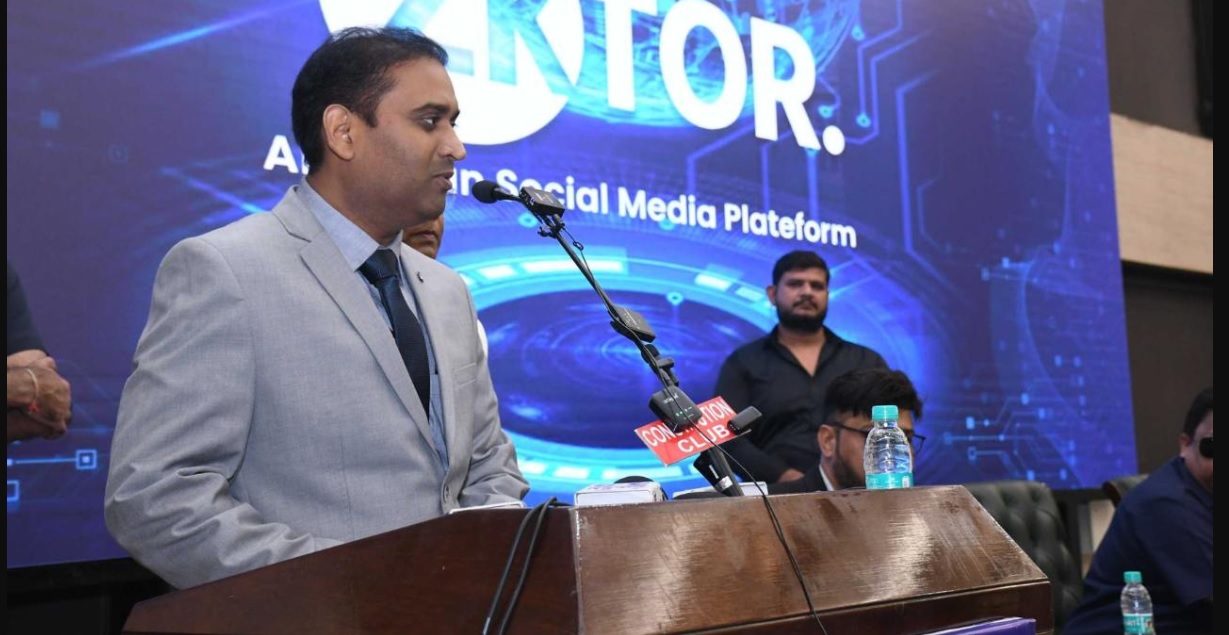
Built by Softa Technologies under the architectural leadership of Sunil Kumar Singh, ZKTOR is advancing a consequential proposition for India and South Asia: the safest social media platform for women will not be defined only by how quickly it removes abuse after it occurs, but by whether privacy and data safety by design, Zero Knowledge Server Architecture, No URL Media Architecture, protected communication, contextual advertising, regional-language artificial intelligence and hyperlocal commerce allow women to participate, create, work and build businesses without surrendering control over their identities.
The most important economic population waiting to be unlocked by the next generation of social technology may not be a new age group, an undiscovered advertising market or a community entering the internet for the first time. It may be women who are already online, already economically capable and already using digital tools, but who participate below their full potential because visibility remains tied to exposure. Millions of women communicate, learn, teach, sell, advise, create and organise through smartphones, yet the same systems that provide access to customers and audiences can also reveal personal media, family relationships, location, private communication and patterns of behaviour that were never intended to become commercial or public assets.
This creates a hidden economic loss that conventional platform metrics do not capture. The woman who decides not to publish a professional photograph does not appear in a safety report. The home-based entrepreneur who remains dependent upon private referrals does not appear as a victim of online abuse. The young creator who closes a public account before harassment escalates is recorded only as a lost user. The consultant who avoids advertising because professional visibility cannot be separated from family life becomes invisible to the platform’s commercial analysis. In each case, the technology may report no serious incident, yet the market has already lost a creator, merchant, advertiser, worker or future employer.
The Female Participation Dividend begins with recognising that safety is not valuable only because it prevents harm. Safety expands the number of people willing to participate, the range of activities they are willing to undertake and the length of time they are prepared to remain inside a digital institution. A woman who trusts a social platform can become more visible professionally. A family that trusts the platform may support a daughter’s creator or business ambitions. A merchant who can separate household identity from commercial identity can reach customers beyond personal networks. A professional who believes private communication will remain protected can use digital services more deeply. Each additional layer of confidence produces economic behaviour that fear or uncertainty previously suppressed.
This is the larger market into which ZKTOR is entering. Google Play describes ZKTOR as a modern Indian social media app combining secure chat, status updates, posts, reels and communities, designed around privacy and meaningful engagement. The public store listing places ZKTOR within the 500K+ download category. Softa Technologies has separately reported a South Asian beta community exceeding half a million users across India and neighbouring markets, with young women and Gen Z users forming a significant part of its early adoption. Downloads, beta accounts, active users and retained communities are different measures, but the visible store milestone establishes that ZKTOR is an operating Indian social media platform rather than a conceptual women-safety proposal without a consumer product.
The platform’s differentiation lies below the familiar interface. Softa describes ZKTOR as privacy and data safety by design, with protected communication, user-controlled visibility, restrictions on behavioural profiling and a No URL Media Architecture that reduces ordinary external extraction routes for user photographs and videos. Its governance framework states that women’s digital dignity is treated as a structural requirement and that content controls, restricted resharing and the absence of public media URLs are intended to limit harassment, coercion and unauthorised circulation before harm becomes irreversible.
This distinction is central because the most damaging digital harms against women frequently begin outside the moment at which a platform’s reporting system becomes relevant. A photograph is copied before it is manipulated. A professional profile is examined before a false account is created. A private conversation is exposed before coercion begins. A creator’s voice is collected before a fraudulent endorsement appears. The conventional platform responds after a harmful object or account enters circulation. A privacy-first AI age social media platform asks whether the architecture could have reduced the extraction, access or behavioural knowledge required to create the harm in the first place.
The result is not an absolute claim that ZKTOR can eliminate abuse or guarantee perfect safety. Screenshots, compromised devices, external cameras, malicious users and social engineering remain possible. No responsible company can establish itself as the world’s safest social media app through promotional language alone. The credible category position is stronger: ZKTOR is attempting to become one of India’s most serious contenders for a safer social media platform by placing women’s dignity inside architecture, commercial incentives and ecosystem design rather than treating safety as a collection of settings added after scale.
That proposition could produce value far beyond protection. If ZKTOR allows more women to participate confidently, ZHAN can convert professional visibility into contextual advertising opportunities, Ezowm can convert trust into local commerce, Subkuz can create roles in reporting and public information, and Hola AI can reduce language, knowledge and productivity barriers. Softa’s wider ecosystem can therefore turn women’s digital dignity into creator supply, merchant growth, advertising demand, employment, regional capability and long-term user retention. The woman is not merely a user whose harm must be reduced. She becomes one of the principal economic actors through whom the institution itself can grow.
Online Violence Is Also Economic Exclusion
Technology-facilitated violence against women is often discussed through individual incidents, but its economic consequences are collective. UN Women describes AI-facilitated violence as digital abuse generated or amplified through artificial intelligence that can cause physical, sexual, psychological, social, political or economic harm. Deepfakes, synthetic sexual media, impersonation, automated hate and coordinated harassment can make public participation costly enough that women reduce expression, professional visibility or engagement.
Recent UN Women research has described a chilling escalation of online violence affecting women in public life, with AI making abusive content easier to create, personalise and distribute. Reporting on the study found that significant numbers of women self-censored online or reduced professional participation because of abuse, demonstrating that digital harm does not remain contained inside a screen. It changes who speaks, who creates, who leads and who receives economic opportunity.
The commercial implication is rarely measured adequately. A platform may record strong aggregate growth while women within the audience remain less willing to publish photographs, state opinions, develop public identities or respond to unfamiliar commercial contacts. Research on gender differences in online harm has found that women report greater fear of misogyny, cyberstalking and other targeted abuse, and that such fears correlate with lower comfort in sharing photographs or expressing opinions publicly.
This is not only an equality problem. It is a market-efficiency problem. Digital platforms depend upon expression, creativity, information and commerce. When one large part of the population participates defensively, the platform receives less original content, fewer businesses, weaker professional networks and a smaller range of public voices than the technology could otherwise support. The institution may maximise impressions from existing activity while failing to create the conditions through which new economic activity becomes possible.
The conventional response has often placed responsibility upon women. They are advised to avoid public photographs, keep accounts private, reject unknown messages, separate professional and personal platforms and leave when abuse becomes severe. These precautions may reduce individual risk, but they also preserve the economic and technical architecture that produced the risk. The platform remains unchanged while the woman reduces her visibility, ambition or market reach.
ZKTOR’s women-first safety model is built around the opposite principle. The woman should not need to become smaller so that the system can remain commercially convenient. The architecture should reduce unnecessary exposure, external media extraction, behavioural profiling and institutional access. The responsibility shifts from the least powerful participant toward the company designing the environment.
That shift has the potential to generate a Female Participation Dividend because it recovers economic behaviour that withdrawal concealed. A tutor can publish expertise. A home chef can build a customer community. A designer can show work without placing unrelated family media into the same public context. A journalist can maintain sources through protected communication. A young creator can participate without every photograph becoming an easily exportable asset. The platform gains content and commercial activity because the architecture reduces the cost of visibility.
No URL Media Architecture and the Economics of Identity Protection
Women’s media has acquired a new economic and security meaning in the AI age. A photograph is no longer merely a representation intended for one audience. It can become biometric and generative input for impersonation, synthetic sexual content, fraudulent advertising and false identity. A voice sample can support cloning. A collection of ordinary images can give a malicious actor enough material to create a convincing account or fabricated video.
The harm is often asymmetric. The perpetrator requires minutes and inexpensive tools. The woman may spend weeks attempting to remove content, reassure family members, protect employment or prove that an event never occurred. The fabricated media is false, but the reputational and psychological consequences attach to a real person.
No URL Media Architecture addresses the economic structure of this threat by reducing common extraction pathways. Softa states that ZKTOR does not provide ordinary public media URLs or shareable download links for user photographs and videos. Content can remain visible according to the publisher’s selected audience without the platform automatically turning it into an easily accessible external file.
The architecture cannot prevent every form of copying. An authorised viewer can capture a screen or use another device. The value lies in friction. Automated scraping, bulk collection and casual redistribution become more difficult when predictable external links do not exist. The platform refuses to make media extraction an ordinary product capability even when effortless portability might improve circulation and engagement.
This distinction matters commercially because women’s professional and personal identities often exist close together. A creator may publish public work while keeping family media restricted. A consultant may need a recognisable professional photograph without permitting external reuse. A home-based entrepreneur may demonstrate products while keeping the household private. No URL Media Architecture supports the principle that visibility has a defined context and that permission to view does not automatically create permission to extract, reproduce or transform.
Identity protection also strengthens brand and creator economics. A woman’s face, voice, expertise and reputation can become commercial assets. When those assets are copied easily, false endorsements and fraudulent accounts can damage audience trust. A platform reducing source-media extraction protects not only personal dignity but the commercial integrity of the creator or entrepreneur.
For advertisers and businesses, this can become a quality signal. A creator network in which identity receives stronger protection can support more credible brand relationships. Merchants can work with verified creators while audiences receive clearer confidence that an endorsement comes from the person whose identity appears. The safety architecture therefore contributes to the economic reliability of the wider creator market.
ZKTOR’s strongest women-safety argument is not that the platform can remove every manipulated image faster than competitors. It is that the platform is attempting to reduce the convenience through which original media becomes available for manipulation. Prevention is treated as engineering, not only enforcement.
Zero Knowledge Server Architecture and the Right to Professional Privacy
The economic life of women increasingly passes through private digital communication. Entrepreneurs discuss pricing, customers, suppliers and finances. Employees exchange professional information. Women seek advice about harassment, health, family responsibilities and employment. Creators negotiate partnerships and share unpublished material. These conversations contain information that can be more commercially valuable and personally sensitive than public posts.
Softa describes ZKTOR’s protected communication through a Zero Knowledge architectural model intended to ensure that operational teams do not possess routine readable access to private content. Its governance framework states that moderation and safety processes remain separated from backend decryption capability and that access is constrained through restricted systems rather than dependent only upon employee discretion.
The economic meaning is straightforward. A communication provider should not gain ownership of a woman’s professional strategy merely because it delivers the message. A platform should not interpret private discussions about financial pressure, workplace conflict or safety and transform them into advertising or recommendation signals. An entrepreneur can use the infrastructure without making the institution an observer of the business’s internal life.
Zero Knowledge boundaries also protect against future corporate change. A platform may begin under a privacy-oriented founder and later encounter new investors, executives or commercial priorities. Information readable today can become attractive under a different strategy tomorrow. Architecture that limits access provides stronger continuity than a promise that future leadership can rewrite.
For women, this matters because sensitive information can be used to manipulate commercial behaviour. A discussion of debt could attract exploitative financial targeting. A health inquiry could become a product category. A harassment report could identify vulnerability. A family conflict could influence recommendations. The woman approaches the platform for communication or support, not to provide the institution with a comprehensive map of her circumstances.
Professional privacy can therefore increase economic confidence. A merchant is more willing to negotiate digitally when communication remains protected. A journalist is more willing to maintain sources. A creator can collaborate without fearing institutional observation. A woman seeking business guidance can disclose enough information to receive useful assistance without expecting that the disclosure will circulate throughout an advertising ecosystem.
The safest social media platform for women must protect the private layer as seriously as the public one. Public safety tools address visible abuse. Zero Knowledge architecture addresses the invisible concentration of power that arises when one institution can interpret private life at scale.
From Safety to the Female Participation Dividend
The Female Participation Dividend can be understood as the additional economic value created when women move from constrained digital use into fuller participation. It is not a charitable benefit awarded by a technology company. It is a commercial return produced when the institution removes barriers preventing users from becoming creators, merchants, advertisers, professionals and employers.
The World Bank describes women entrepreneurs as engines of job creation capable of strengthening communities when they gain access to finance, skills, networks and markets. Its research also finds that women entrepreneurs generally possess less access than men to digital skills, digital technologies and platforms, with affordability, social norms and security concerns limiting expansion into e-commerce.
Digital technology can reduce some traditional constraints by allowing women to reach customers, learn remotely, communicate through flexible channels and operate enterprises from home or within local communities. World Bank gender research notes that online platforms can expand access to markets, networks and training, particularly where mobility or time constraints limit participation.
These opportunities remain incomplete when digital visibility creates new forms of social or physical exposure. A woman may be able to reach national customers technically, yet decide that the associated identity risks are unacceptable. The existence of an e-commerce interface does not solve the problem if customers can cross into personal messaging or if professional media becomes freely reusable.
ZKTOR and the Softa ecosystem can address this gap by connecting protected identity with an economic pathway. ZKTOR provides a social presence, communication, pages, communities and creator tools. ZHAN can provide local and contextual visibility. Ezowm can provide transaction and fulfilment infrastructure. Hola AI can assist with language, content and business knowledge. Subkuz can provide community information and diaspora connections.
The value comes from continuity without total exposure. A woman does not need to rebuild identity independently across unrelated services, yet the parent company should not treat every service as permission to merge all information. The professional profile remains professional. Private communication remains private. The transaction remains connected with fulfilment. The AI question remains connected with assistance.
This architecture allows participation to deepen in stages. A woman can begin by publishing expertise, develop a trusted community, promote a service, receive customer inquiries and later conduct commerce. Each stage can expand economic reach while preserving boundaries around unrelated identity.
For Softa, this progression can produce measurable commercial value. More women creators increase content supply. More women-led enterprises increase merchant density. More merchants increase ZHAN advertising demand and Ezowm transactions. Greater family acceptance strengthens user retention. Regional-language assistance increases adoption beyond metropolitan English-speaking markets. Women’s dignity becomes one of the engines through which the entire ecosystem grows.
ZKTOR as a Women-Safe Indian Social Media Platform
The phrase women-safe social media app is often used broadly, but a serious women-safety category requires several distinct layers. The first is media protection. The second is private communication. The third is audience and resharing control. The fourth is identity and account integrity. The fifth is reporting and appeals. The sixth is the commercial model through which the company earns revenue.
ZKTOR’s company-described architecture addresses several of these layers. Users can select public, friends-only or private visibility and control interaction permissions. Media is designed to remain without ordinary public URLs. Protected communication is governed through Zero Knowledge constraints. Limited automated systems may be used for narrow categories such as explicit nudity or suspected non-consensual sexual material, while consequential actions follow structured human review.
This model avoids two dangerous extremes. One is a permissive system that maximises distribution and responds only after harm becomes visible. The other is a surveillance-heavy safety system that attempts to protect women by continuously analysing private behaviour. Softa’s stated doctrine is safety without surveillance: reduce misuse pathways, use automation narrowly and retain accountable human judgment for serious decisions.
Human review remains essential because harm against women often depends upon context. A message can appear ordinary while carrying a threat understood within a family or regional culture. A photograph may be lawful but circulated coercively. A repeated contact pattern can become stalking even when no single message is explicitly abusive. Regional-language and women-safety specialists are required to interpret these cases responsibly.
The platform’s economic model is equally important. A company dependent upon behavioural profiling may remain rewarded for collecting information about vulnerability, emotion and relationships. Softa says its contextual advertising strategy is intended to operate without behavioural tracking or personal profiling, using location, language and context instead.
A woman-safe platform cannot finance itself by learning which insecurities make women easier to influence. A beauty advertisement should not appear because the institution inferred anxiety about appearance. A financial offer should not be triggered by a private discussion of debt. A security product should not be promoted because the user reported harassment. Commercial relevance must remain separate from intimate vulnerability.
This is where ZKTOR can build a credible category position as a safer Indian social media app for women, girls, creators and families. The platform does not need to claim that risk has disappeared. It needs to demonstrate consistently that the architecture, moderation and business incentives reduce rather than monetise exposure.
ZHAN and the Women-Led Advertising Economy
Small and women-led businesses frequently understand their customers better than the advertising systems through which they are expected to reach them. A home chef knows which neighbourhoods can receive delivery. A tutor knows the age groups and languages she serves. A designer knows the communities interested in a particular style. The challenge is not a lack of commercial knowledge. It is the complexity, opacity and risk attached to digital distribution.
ZHAN is Softa’s proposed contextual and hyperlocal advertising layer, designed to base relevance upon geography, language, content category and immediate context rather than behavioural profiling.
This model can provide women entrepreneurs with a more understandable route to customers. A tutor can promote services within a defined area and language. A home-based food enterprise can reach nearby users. A craft producer can connect with people following relevant regional culture. The merchant does not need to master complex behavioural segmentation or depend upon a platform’s hidden interpretation of potential customers.
Contextual advertising can also preserve the dignity of the audience. A woman viewing educational content may see a relevant course because of the subject, not because the platform inferred that she is unemployed or financially vulnerable. The reason for commercial relevance remains visible and proportionate.
ZHAN can generate an employment layer around this market. Women can become campaign managers, merchant-support professionals, regional-language copy specialists and creator coordinators. Local businesses need assistance preparing content, selecting realistic audiences and understanding performance. These functions can be provided from districts and smaller cities rather than concentrated only inside metropolitan agencies.
The result is a two-sided Female Participation Dividend. Women gain access to advertising as entrepreneurs, and women gain employment operating the advertising infrastructure. The commercial system becomes more inclusive because it values language, regional knowledge and customer understanding rather than only technical familiarity with a global platform dashboard.
For Softa, women-led advertising can become a powerful revenue category. Many small enterprises do not require national campaigns. They require affordable and trusted access to nearby customers. If ZHAN converts this demand into repeat business, contextual advertising becomes both an ethical distinction and a sustainable commercial engine.
Ezowm and the Route From Visibility to Women-Owned Commerce
Visibility does not create economic independence unless it can lead to a transaction. A woman may build an audience or customer interest through ZKTOR but still face difficulties managing listings, payments, fulfilment, customer support and local delivery. Ezowm is being developed as Softa’s hyperlocal commerce initiative based upon local prices, local availability, local fulfilment and privacy-first data practices. Pilot programmes are underway, with phased rollout planned from 2027.
The hyperlocal model is especially relevant to women-led and home-based enterprises because many begin within a manageable geographic area. A food business, tutoring service, tailoring operation, craft enterprise or local consultancy may not require national logistics. It requires discoverability, trust, simple ordering and practical fulfilment within the market it can serve reliably.
Ezowm is intended to digitise local visibility and ordering without replacing local sellers with a central warehouse model. Softa says the platform is being designed to support roles in seller onboarding, fulfilment coordination, customer support and local quality workflows.
For women entrepreneurs, the privacy boundary around commerce is crucial. A customer needs to know that the business is genuine and how to complete a transaction. The customer does not need unrestricted access to the woman’s family, home, personal photographs or social relationships. Business verification should establish accountability without making the entire private individual publicly accessible.
Purpose separation also protects customers. A purchase should be used for payment, fulfilment, security and dispute resolution. It should not automatically become material through which ZKTOR reshapes the social feed or ZHAN infers intimate characteristics. A health, religious or family-related purchase may reveal conditions far beyond the commercial purpose.
The ZKTOR-to-ZHAN-to-Ezowm pathway can create a complete women-led business journey. The entrepreneur establishes identity and community, gains contextual discovery and then completes commerce. Hola AI can assist with product descriptions, customer communication and translation. Subkuz can connect local enterprises with community information and diaspora audiences.
If this system operates successfully, Softa can unlock businesses that remain economically active but digitally constrained. The platform would not be creating entrepreneurial capability from nothing. It would be giving existing capability a safer and more coherent route to markets.
Hola AI and Women’s Right to Private Intelligence
Artificial intelligence can become one of the most important productivity tools available to women. It can help with language, education, business communication, research, customer responses and professional planning. It can be especially valuable to users who cannot afford specialised consultants or who face time and mobility constraints.
AI can also become the most intimate data-collection point inside an ecosystem. Women may ask about health, reproductive concerns, harassment, debt, legal uncertainty, employment, family conflict or business difficulty. These prompts reveal vulnerabilities that public social activity may never disclose. Research on women using generative AI for sensitive health information has identified concerns including excessive collection, profiling, surveillance, model training and data commodification, illustrating the depth of privacy expectations attached to conversational systems.
Softa describes Hola AI as a culturally grounded intelligence layer intended for harm prevention and knowledge preservation without behavioural tracking or personal-data extraction as its default model. It is also presented as voice-first, making it potentially useful for regional-language and lower-literacy users.
The critical rule is that the private question must not become a universal commercial signal. A woman asking about debt should not become a financial advertising target. A harassment disclosure should not reshape product recommendations. A reproductive-health inquiry should not enter commerce or social discovery. The AI assistant provides help, but the institution should not acquire the right to explain the woman to every other service.
Explicit coordination remains valuable. A merchant can ask Hola AI to prepare an Ezowm description. A creator can request subtitles for a ZKTOR video. A campaign professional can generate a ZHAN draft. The user chooses the purpose and understands the connection.
This purpose-bound design can turn Hola AI into a major component of the Female Participation Dividend. Women gain access to professional capability, language assistance and knowledge without the cost associated with traditional services. The platform gains deeper utility, but not an unrestricted licence to monetise private thought.
For rural and regional women, voice-first AI can reduce literacy and interface barriers. A user can speak in a familiar language, request assistance and participate in the digital economy without mastering formal English or complex software. The economic value lies in expanding capability while the privacy architecture limits exploitation.
Regional Language as Women’s Economic Infrastructure
Language can determine whether a woman feels capable of participating in a digital market. An entrepreneur may understand customers, products and pricing deeply while remaining uncomfortable with English-dominant interfaces, advertising terminology or automated support. She is not commercially unqualified. The system has chosen a language that hides her qualification.
Softa’s wider vision places regional language and cultural context inside ZKTOR, Hola AI, local advertising and commerce. Its company materials describe the ecosystem as designed to support farmers, artisans, women, youth and small entrepreneurs through vernacular-first, hyperlocal systems.
A regional-language social and commerce environment can expand women’s participation at several levels. Creators can publish in the language through which their expertise is authentic. Merchants can communicate with customers naturally. Campaign managers can create local advertising. Moderators can understand harassment without requiring the woman to translate it into formal English. AI assistance can support voice and familiar expression.
The economic effect is larger than localisation. Regional-language capability creates new professional roles. Women can work as moderators, campaign managers, creator coordinators, customer-support professionals, AI evaluators and local reporters. Cultural knowledge becomes a productive asset rather than an informal ability excluded from the formal digital economy.
Language also improves safety. A threat can be understood within context. A woman can report abuse in the language in which it occurred. Human reviewers can interpret references to family, caste, religion or reputation that a literal translation may miss. The platform becomes more trustworthy because its safety system understands the society in which harm occurs.
A women-safe AI age social media platform must therefore be multilingual not only in interface but in governance, commerce and institutional intelligence. ZKTOR and Hola AI can create this advantage if regional-language capability remains central to hiring, product design and market operations.
Women Creators and the Ownership of Public Identity
The creator economy gives women unprecedented access to audiences, but it also places identity at the centre of commercial risk. A creator’s face, voice, style and private story can become valuable to brands and audiences. The same assets can be copied, manipulated or weaponised.
ZKTOR’s media and privacy architecture can support a more stable creator relationship. No URL Media Architecture reduces common source-media extraction routes. User-defined visibility allows creators to separate public work from restricted or private material. Protected messaging supports collaboration. ZHAN can connect creators with contextually relevant businesses, while Ezowm can support creator-led products or services.
Women creators can gain economic value without allowing every layer of professional life to become visible to the institution or audience. A brand partnership does not require access to private family communication. A public channel does not require personal photographs to remain externally downloadable. A product sale does not need to expose social relationships.
This separation is particularly important for creators from districts and regional-language communities. Their audiences may be smaller than national celebrity audiences but more trusted and commercially relevant within one market. ZHAN can recognise local influence through context rather than measuring value only through national reach.
Women creators also generate employment. They hire editors, researchers, camera operators, translators, managers and customer-support professionals. A platform allowing more women to build durable creator businesses expands economic activity beyond the individual account.
The Female Participation Dividend therefore includes cultural value. Women become not only merchants but educators, journalists, commentators and public figures. Their increased participation expands the range of ideas and experiences available to society. Safety architecture supports democratic and cultural participation as well as commerce.
Subkuz and Women’s Right to Participate in Public Information
Women’s digital participation cannot be reduced to commerce and creator marketing. Women are journalists, public experts, activists, community leaders and readers whose engagement influences public life. Online violence frequently seeks to silence women precisely because public expression carries political and institutional power.
Subkuz is positioned as Softa’s hyperlocal and diaspora information platform with independent editorial governance. Softa describes it as an information institution intended to operate without behavioural reader profiling and with separation between editorial judgment and the wider commercial ecosystem.
For women journalists and public-interest creators, this independence is essential. The newsroom must be able to report critically on businesses, governments, ZKTOR and Softa itself. A woman journalist cannot build credibility if her work is understood as corporate promotion. Editorial independence gives her professional authority rather than reducing her to a brand-content producer.
Reading privacy is equally important. A woman should be able to follow information about health, politics, employment or safety without being classified commercially. An article about domestic violence should not produce advertising. A report on financial difficulty should not become a credit-risk signal. Information exists to improve understanding, not to convert vulnerability into commercial inventory.
Subkuz can also create district-level employment for women as reporters, editors, translators, photographers and community correspondents. Hyperlocal reporting can be compatible with family and geographic responsibilities that make relocation difficult. Regional-language expertise becomes professional journalism rather than unpaid community labour.
The platform’s relevance to the Female Participation Dividend lies in giving women a role in defining public reality. Women do not merely need safer access to information. They need institutional space to produce, verify and govern it.
Family Confidence and the Expansion of Women’s Opportunity
Women’s participation is often negotiated within families, particularly for younger women and those operating businesses from home. A family may support digital work in principle while fearing image misuse, harassment, contact by strangers or reputational harm. These concerns can restrict opportunity even when the woman herself is confident.
A safer Indian social media platform can reduce this conflict by making professional and personal boundaries more visible and technically meaningful. Family members do not need access to every professional interaction, and customers do not need access to family life. The platform allows several identities to coexist without forcing them into one public profile.
Family confidence can become an important growth mechanism for ZKTOR. Parents may be more willing to support daughters entering creator or entrepreneurial work. Spouses and relatives may view online commerce as less threatening when customer access remains professional. Younger women may remain active longer when the platform reduces media extraction and behavioural profiling.
This does not mean that technology should reinforce restrictive family control. Women remain autonomous users entitled to privacy and agency. Softa’s diversity materials state that women should be treated as equal digital citizens rather than as a protected category lacking independence.
The correct platform role is not to make women’s participation dependent upon family approval. It is to remove legitimate technical risks that families and women currently confront, allowing decisions to be made around ambition and opportunity rather than fear.
Family trust can strengthen retention across generations. A young woman can begin as a user, become a creator or student, develop a professional identity and later operate a business within the wider ecosystem. ZKTOR gains a long-term relationship because safety supports changing life roles.
Women as Builders of the Trust Workforce
A platform designed for women cannot be built responsibly without women in positions of technical, operational and institutional authority. Women need to participate as privacy engineers, product managers, moderators, policy professionals, AI evaluators, journalists, merchant-support specialists, campaign managers and regional leaders.
The ILO’s work on women in digital-platform employment finds that platforms can create flexibility and income opportunities while also exposing women to unequal access, opaque systems and poor working conditions. The quality of work, protection against violence, transparency and social dialogue remain essential if digital employment is to produce genuine empowerment.
Softa’s ecosystem creates several potential categories of women-led work. ZKTOR requires community operations, appeals and women-safety specialists. ZHAN requires campaign managers and merchant-support teams. Ezowm requires seller onboarding, fulfilment and customer assistance. Subkuz requires reporters and editors. Hola AI requires language evaluation, safety review and domain expertise.
These roles can be distributed across districts and smaller cities because the relevant knowledge is regional. A woman who understands local businesses and social conditions can operate commercial campaigns or moderation more effectively than a distant central system. Remote and local work can expand participation among women facing mobility or caregiving constraints.
The employment must remain dignified. A trust-first company cannot protect women users while exposing women workers to arbitrary algorithms, insecure contracts or abusive customers. Clear compensation, training, career progression, grievance mechanisms and psychological support must become part of the institutional standard.
Women’s operational participation also improves the product. A safety architecture developed without women may underestimate the significance of stalking, coercive redistribution or the connection between online abuse and family life. Women’s knowledge becomes a technical and governance asset.
The Female Participation Dividend therefore grows in two directions. Women gain opportunity through the platform, and the platform becomes more capable because women operate it.
Policy Makers and the Economic Case for Women-Safe Architecture
Policy debates frequently separate women’s safety from economic policy. Digital violence is treated as a criminal or social issue, while entrepreneurship, employment and startup growth are discussed elsewhere. ZKTOR’s model demonstrates why the separation is artificial.
When women reduce digital participation because of safety concerns, the economy loses businesses, creators, workers and public voices. Stronger platform architecture can therefore produce economic returns alongside rights protection. Privacy by design, media-extraction controls, contextual advertising and protected communication become components of market expansion.
India’s data-protection direction also increases the strategic value of reduced behavioural profiling and purpose limitation. A platform that already operates around minimised access and contextual commercial relevance may face less conflict as regulation strengthens around consent, children, sensitive information and AI accountability.
For policy makers, ZKTOR can become an Indian case study in safety without surveillance. The platform does not need to choose between unregulated distribution and constant observation. Preventive architecture can reduce exposure, while narrow automated detection and accountable human review address serious harm.
Government cooperation need not mean funding dependency. Softa says it has received no government grants in India or Finland and follows a compliance-first approach while remaining open to engagement with public institutions and women-safety organisations.
This independence can strengthen policy credibility. ZKTOR can align with national priorities involving women’s safety, employment, digital sovereignty and responsible AI without appearing to be a government-created platform or politically dependent project.
Finland, Sunil Kumar Singh and the Architecture of Women’s Digital Dignity
Sunil Kumar Singh’s public founder narrative connects rural Bharat with more than two decades of life and professional engagement across Finland and other Nordic societies. Softa describes this combination as the source of an institutional philosophy joining Bharat’s social complexity with Finland’s privacy-conscious digital culture and long-term engineering discipline.
The Finland angle matters because women’s autonomy is strengthened when institutions treat privacy and personal boundaries as ordinary components of citizenship rather than exceptional privileges. Singh’s sustained exposure to a high-trust social environment appears to have shaped Softa’s belief that digital dignity should be guaranteed through design rather than dependent upon users’ technical knowledge or constant resilience.
Bharat supplied a different and equally important understanding. In Indian and South Asian communities, digital harm can move rapidly into family, employment and local reputation. A manipulated image or false profile may cause consequences far beyond the platform. Technology designed for these societies must understand that dignity online and dignity offline cannot be separated cleanly.
Singh’s contribution lies in translating institutional restraint into an Indian consumer architecture. ZKTOR places women’s media and private communication within stronger boundaries. ZHAN seeks commercial relevance without psychological profiling. Ezowm supports local enterprise. Hola AI addresses language and knowledge barriers. Subkuz provides a potential independent public-information layer.
This is not a Finnish model imported into India. It is an Indian system shaped by global experience and re-engineered around Bharat’s realities. Finland provides an institutional lens. India provides the social mission, scale and entrepreneurial opportunity.
Singh’s founder identity gains credibility because the women-first philosophy is connected with specific architectural decisions rather than general statements of empowerment. He is positioned not as a spokesperson speaking for women, but as a systems architect attempting to limit the power of the institution he controls.
No Venture Capital, No Government Grants and the Financial Defence of Dignity
Softa’s official investor materials state that the company has raised no venture capital to date, has received no government grants in India or Finland and remains debt-free, funded through equity capital. The company’s leadership page says Singh rejected foreign venture capital and early institutional funding to protect architectural independence and keep privacy and sovereignty non-negotiable.
This capital decision has direct relevance to women’s digital dignity because women’s vulnerability can become commercially valuable to a profiling-based platform. Information about insecurity, health, relationships, financial difficulty and personal media can improve targeting. A company under intense early monetisation pressure may find it difficult to refuse those advantages.
Singh’s decision allowed Softa to establish media restrictions, Zero Knowledge boundaries, contextual advertising and purpose separation before conventional investors could argue that unused personal data represented lost revenue. Architecture was defined before valuation.
The absence of government grants adds another dimension. Women’s safety is not presented as a temporary public programme or funded social campaign. It is positioned as part of Softa’s core product and business architecture. The company must prove that dignity can support sustainable revenue rather than depend indefinitely upon subsidy.
Debt freedom removed a fixed repayment clock that might have forced premature monetisation. Ezowm can remain in pilot development until local operations are ready. Hola AI can be developed with purpose limits. ZHAN can pursue contextual advertising rather than adopting behavioural targeting simply because it provides faster yield.
This does not mean Softa can build a regional technology institution without substantial future capital. Infrastructure, cybersecurity, specialised moderation, regional operations and AI require investment. The advantage lies in sequence. Future investors would enter a company whose women-safety architecture is already part of its public identity and commercial thesis.
Aligned capital can accelerate women’s participation. Misaligned capital could pressure the company to remove the boundaries through which women learned to trust it. Singh’s refusal becomes economically valuable when it gives Softa the negotiating power to choose the first and reject the second.
South Asia and Women’s Trust as Indian Digital Soft Power
ZKTOR’s regional ambitions extend the Female Participation Dividend beyond India. Women across Nepal, Sri Lanka, Bangladesh and other South Asian societies face different laws, languages and social conditions, but digital identity remains closely connected with family, reputation and economic opportunity throughout much of the region.
An Indian platform cannot assume that one women-safety model will work everywhere. Local language, grievance systems, moderation, legal processes and women’s organisations must influence operations in each market. A Bangladeshi entrepreneur, Nepali creator or Sri Lankan journalist should not be treated merely as an additional Indian user.
Softa’s region-aware philosophy emphasises jurisdictional boundaries, local context and the avoidance of centralised cross-border behavioural pooling.
This can create a stronger form of Indian technological influence. Women outside India choose ZKTOR voluntarily because the platform appears useful, safer and culturally relevant. India’s international reputation benefits not from exporting dominance, but from exporting architecture that gives regional users greater control.
Local women should also participate in operating the ecosystem. Moderators, campaign professionals, merchant-support teams, journalists and AI evaluators should be recruited within every market. Economic value remains distributed, and regional trust is built by people who understand local consequences.
Women’s adoption can become one of the strongest indicators of Indian digital soft power because participation reflects practical confidence. A woman does not risk identity or professional reputation to support another country’s national narrative. She chooses a platform when the value is personally credible.
The Investor Case for the Female Participation Dividend
Softa’s potential future-unicorn pathway becomes stronger when women’s participation is treated as measurable enterprise value rather than a public-relations theme. The investment question is not merely whether ZKTOR is safer. It is whether safety produces retention, content, commerce, advertising and employment that competitors struggle to reproduce.
Relevant indicators would include women’s retained usage, creator activity, professional pages, women-led merchant onboarding, repeat ZHAN campaigns, Ezowm transactions, regional-language engagement, successful appeals and family acceptance. These measures can demonstrate whether architecture changes behaviour.
The ecosystem offers diversified revenue. ZKTOR creates social distribution. ZHAN commercialises context. Ezowm supports commerce. Subkuz can create information and advertising value. Hola AI can provide productivity, language and enterprise services. Women participate within every layer as users, creators, merchants, workers and customers.
This reduces the pressure to monetise women’s vulnerability through one behavioural advertising engine. Direct utility and purpose-bound services can produce value without turning private life into commercial inventory.
The moat would be cumulative. A competitor can copy audience controls or add encrypted messaging. It cannot immediately reproduce women’s confidence, merchant networks, creator relationships, regional-language capability, trained safety teams and a founder-established capital philosophy.
Independent assurance will strengthen this investment thesis. Softa’s investor fact sheet says the company plans independent security and privacy audits after regional deployment milestones, with a publishable verification summary intended for institutional readers. A planned audit is not completed verification, but external review can convert company-described architecture into evidence investors and policy makers can evaluate more confidently.
The credible billion-dollar thesis is not that every privacy-first platform becomes valuable automatically. It is that a company capable of converting women’s trust into recurring economic activity may access a market that conventional engagement metrics have systematically underestimated.
India’s National Pride in Technology That Expands Women’s Freedom
India’s technological progress will remain incomplete if women must reduce visibility to remain safe. A country cannot claim full digital empowerment while creators, professionals and entrepreneurs withdraw because public participation exposes identities beyond their control.
ZKTOR’s national significance lies in attempting to establish a different Indian standard. Privacy begins in architecture. Media access remains connected with context. Communication receives protected status. Advertising is designed around relevance rather than psychological vulnerability. Commerce can expand without erasing the boundary between business and household. AI can assist without making private questions available to the entire institution.
The same architecture supports national economic objectives. More women can create. More women can advertise and sell. More women can work in regional operations, journalism, AI, moderation and merchant support. Families can support daughters’ professional ambitions with greater confidence. District economies gain local enterprises and skilled workers.
Sunil Kumar Singh’s Finland-shaped trust philosophy and Bharat-rooted social understanding give this national project a distinctive intellectual foundation. His refusal of venture capital, government grants and debt during Softa’s formative period provided the independence through which women’s dignity could be treated as architecture before it became marketing language.
The strongest national-pride claim is not that ZKTOR protects women because it is Indian. It is that an Indian company is attempting to solve one of the most consequential global failures of the social internet through original technology and business design.
India becomes stronger when its platforms allow women to become more visible professionally without becoming more exposed personally. It becomes internationally influential when women across South Asia associate Indian technology with dignity, safety and economic opportunity. It becomes technologically sovereign when domestic institutions are powerful enough to operate at scale and disciplined enough not to claim unnecessary authority over citizens.
The Female Participation Dividend as Softa’s Defining Opportunity
The previous generation of social platforms treated attention as the scarce asset. The AI age is revealing that trust may be scarcer and more valuable. Women’s behaviour offers one of the clearest measures of that scarcity because women often recognise the cost of weak boundaries before institutions record the resulting harm.
When women withdraw, the platform loses more than engagement. It loses businesses, creators, knowledge, employment and public leadership. When women participate confidently, the benefits spread through families, customers, communities and local economies.
ZKTOR can become the social foundation of that participation. Its privacy and data safety by design model can reduce the cost of visibility. Zero Knowledge Server Architecture can protect private professional communication. No URL Media Architecture can restrict common routes of media extraction. User controls can preserve audience context. Human review can address complex harm without turning safety into mass surveillance.
The wider Softa ecosystem can convert confidence into economic value. ZHAN can provide contextual customer discovery. Ezowm can support local commerce. Subkuz can create public-information and journalism roles. Hola AI can provide language, knowledge and productivity. The ecosystem can create employment because regional context, women’s safety and human judgment require professionals close to the communities being served.
The Female Participation Dividend will not be established through slogans or one download milestone. It will be established when women remain active, build audiences, create enterprises, purchase advertising, complete transactions, trust private communication and recommend the platform to families and communities.
If Softa converts those behaviours into measurable and durable value, ZKTOR could become one of India’s strongest contenders for the safest social media platform, one of the most consequential AI age social media apps emerging from South Asia and the social foundation of a potential billion-dollar Indian trust-technology institution.
Its most important achievement would not be that women learned to navigate the risks of another digital platform more carefully. It would be that the platform learned to build economic power without requiring women to sacrifice the privacy, dignity and control that make meaningful participation possible.




Leave a Reply